The popular advice is to use AI video advertising to make more ads, more cheaply, and publish them everywhere. That advice is incomplete. More output can improve testing, but it can also multiply weak hooks, generic claims, unnatural motion, and conversion leaks across every channel.
The advantage isn't synthetic production by itself. It's the ability to turn one offer into a controlled system of creative variations, audience signals, platform-native edits, and measurable learning. AI can win the first click while losing the sale, so the performance marketer's job is to protect the handoff between attention and trust.
The Reality of AI Video Advertising
AI video advertising has moved from an experimental production shortcut into the media operating model. The IAB's 2025 digital video advertising coverage found that 86% of video ad buyers were already using or planning to use generative AI for video creative, with about half already using it actively. Adoption changes the marketer's job. Teams are building a repeatable system for generating, launching, comparing, and refining creative, rather than replacing a camera shoot with a prompt.
The performance workflow should begin with the offer, not the generator. Define the audience problem, proof point, objection, and action you want the viewer to take. Then create controlled variations around those decisions. One cut can open with a product demonstration, another with a customer pain point, and a third with a comparison. The surface changes while the commercial logic remains recognizable.
Attention is only the first checkpoint. AI can produce a striking opening that earns a view or click, then lose the sale through an unsupported claim, an awkward product depiction, or a landing-page mismatch. Use invisible augmentation where it helps, such as adapting captions, framing, pacing, and calls to action for each placement without making the ad feel machine-made. Brand trust should remain visible; the automation should not.
From asset creation to creative iteration
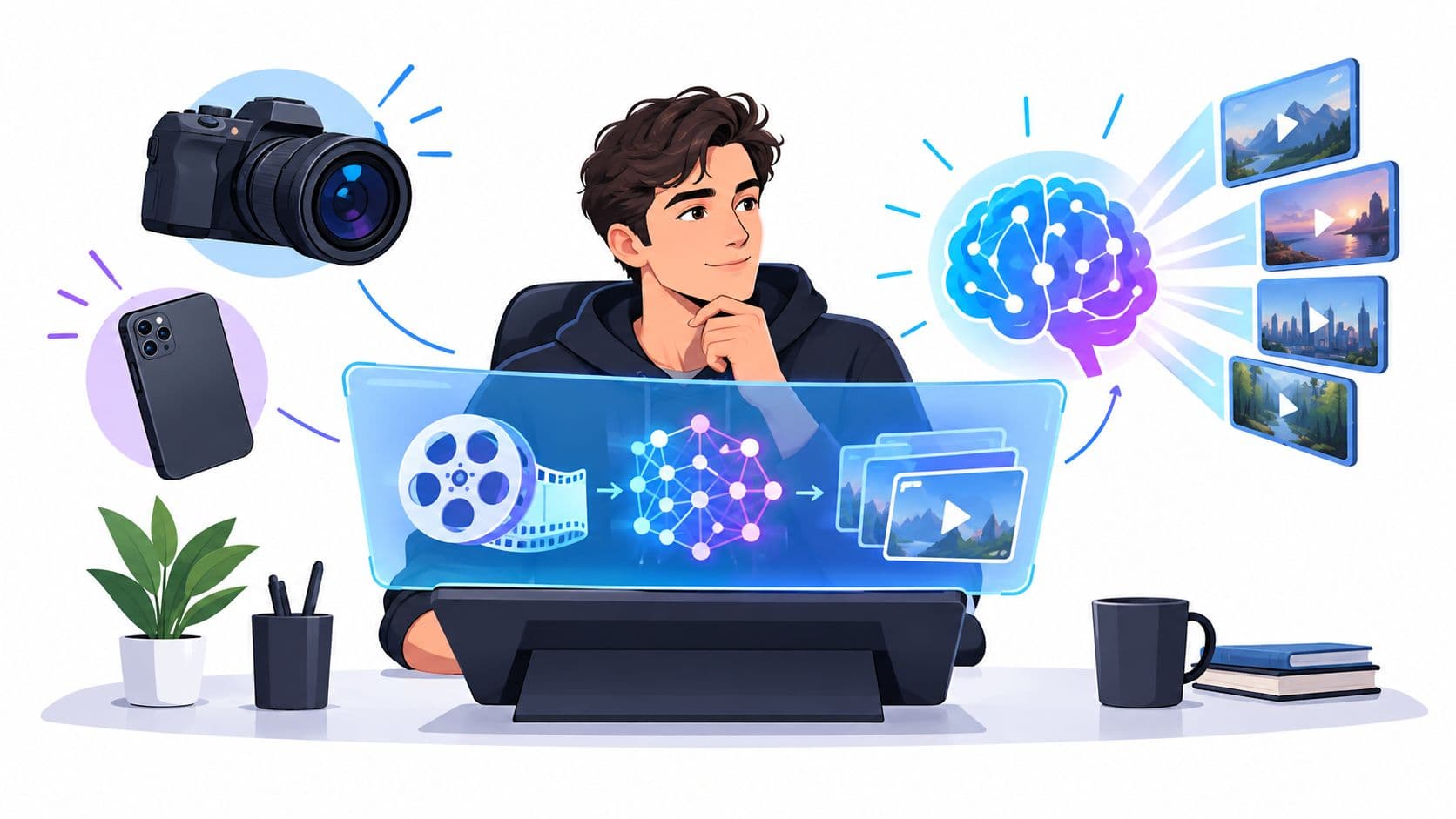
Traditional production encourages commitment to a small number of expensive concepts. AI makes it practical to explore more routes before deciding which deserves additional spend. That does not mean publishing every variation. It means separating generation from selection, then using campaign evidence to narrow the field.
The marketer becomes a director of systems. AI can suggest hook structures, pacing changes, visual sequences, captions, voiceovers, and edits from a brief. A human must still judge whether the promise is credible, whether the product appears accurately, and whether the ad sounds like the brand instead of a template library.
Practical rule: Use AI to expand the number of hypotheses you can test, not to outsource the judgment that makes an ad persuasive.
Distribution determines how each approved concept should be finished. A feed ad may need a faster opening and readable captions, while vertical short-form video can rely on tighter visual progression. Retargeting can foreground proof or objections, and a landing-page version may need more product context. Preserve the central claim, but adapt the opening, duration, caption density, and call to action to the platform and buying stage.
For marketers building that system, these practical AI video tips help explain how generation tools support ideation and execution. Speed creates value only when the team has a testing structure and retires weak assets quickly.
The hidden unit economics
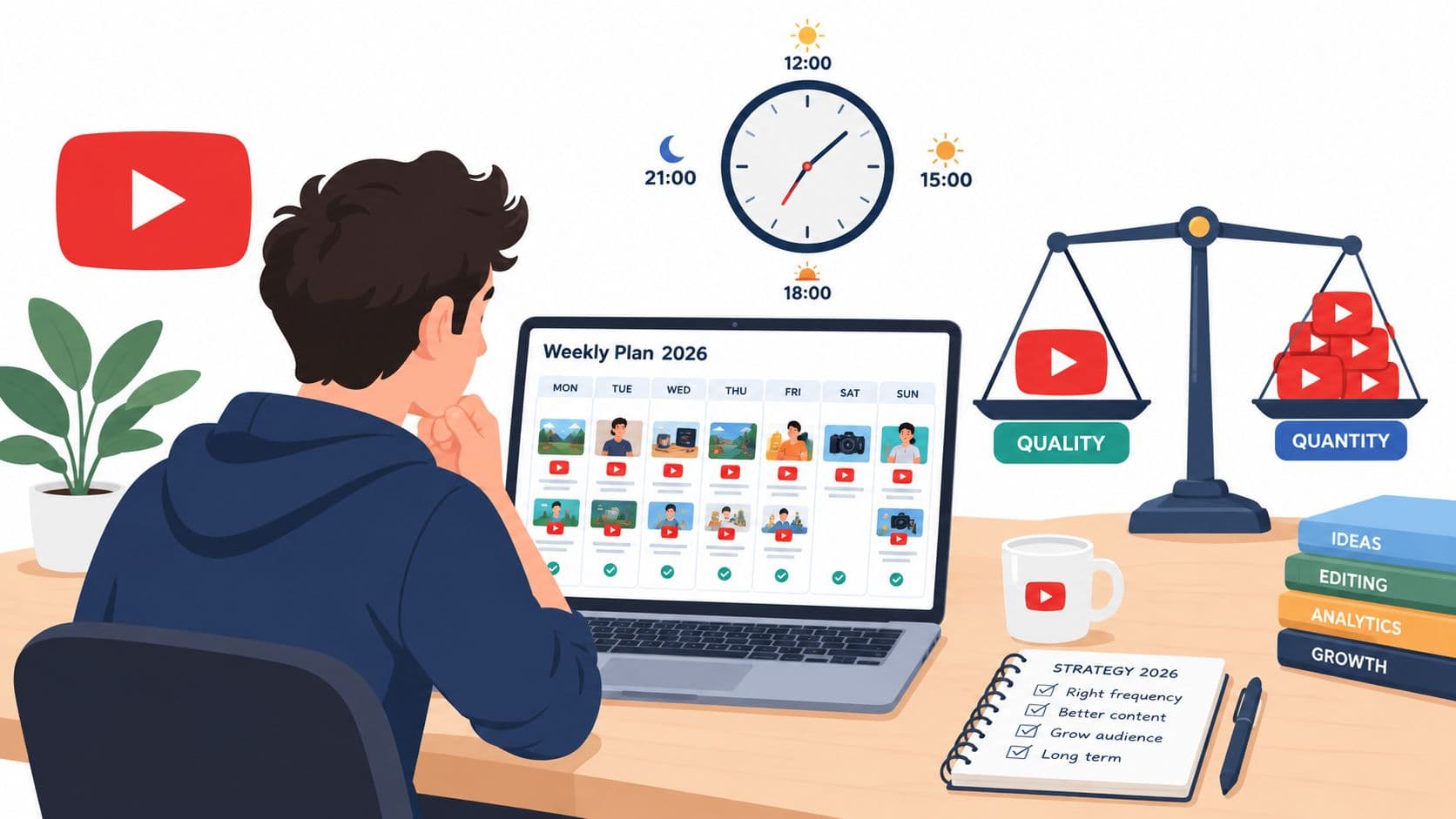
Lower production friction matters, but the larger gain is cheaper learning. Testing several hooks without commissioning a new shoot for each one lets a team put more budget into distribution and less into protecting an unproven concept.
The benefit disappears when output becomes the objective. A large library of interchangeable videos can create fatigue, inconsistent claims, and a fragmented brand. The target is a higher rate of useful creative learning per campaign cycle, with attention that still converts after the first impression.
How AI Optimizes Creative and Targeting
AI improves paid video in two distinct ways, and confusing them creates poor campaigns. AI for volume produces many combinations of scripts, visuals, captions, voices, and formats. AI for insight uses audience and performance feedback to decide which combinations deserve another iteration.
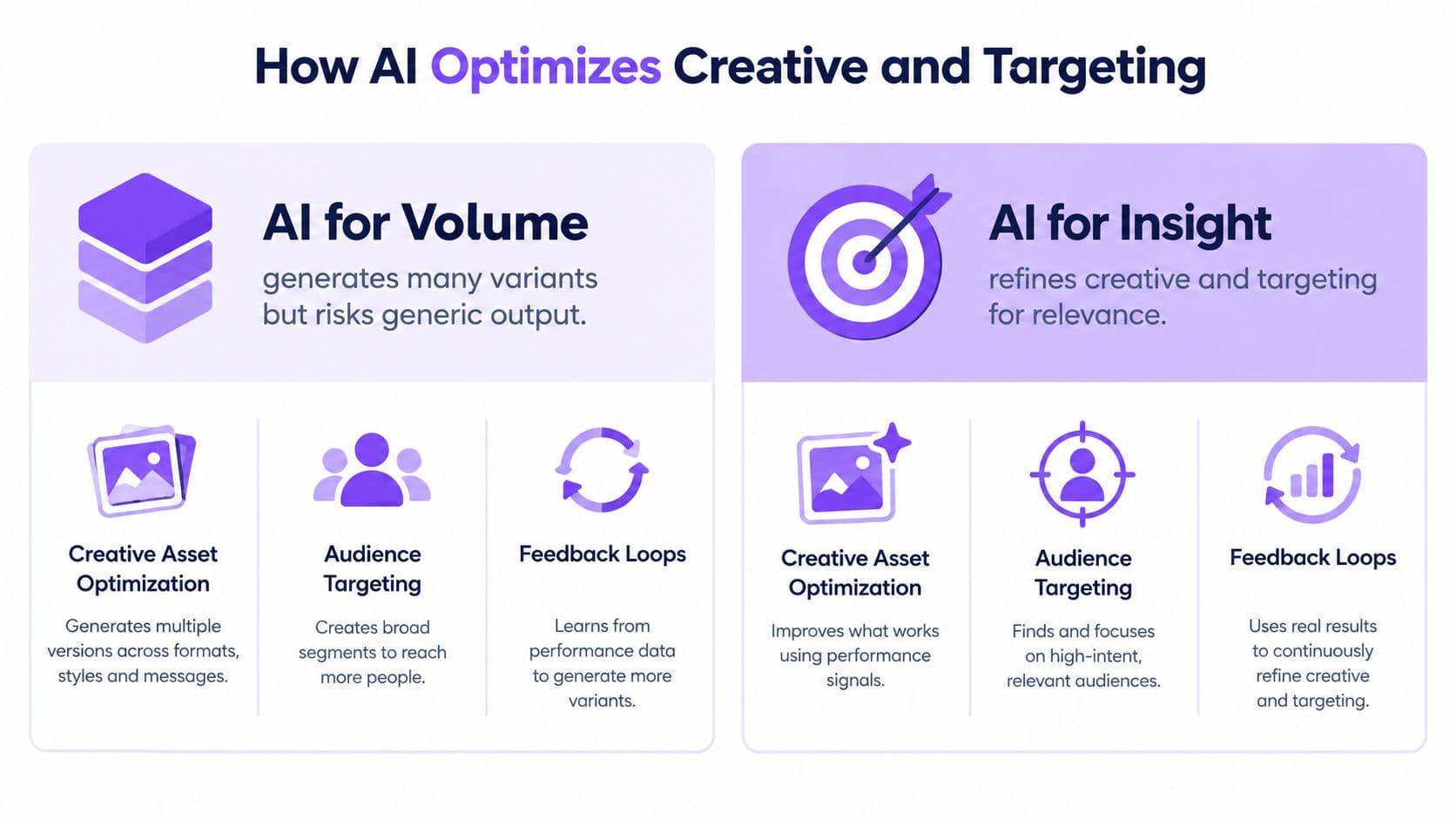
Volume is helpful when the team has a sound testing hypothesis. It becomes noise when every output changes several variables at once. If the hook, offer, visual style, audience, and landing page all change together, the reporting may show a winner without revealing why it won.
Where AI earns attention
Generative systems are good at producing novelty. They can vary the first frame, compress a product benefit into an opening line, change visual pacing, and create several interpretations of the same customer problem. Those changes matter in an environment where a viewer decides quickly whether to continue watching.
A randomized field experiment involving more than 21,000 consumers found that personalized generative-AI video ads increased click-through rates by 9.4% versus personalized image ads and 6.5% versus generic video ads, while reducing production cost by roughly 90%. The MIT field experiment on personalized AI video ads is especially useful because it separates audience selection from the creative and personalization mechanism.
That result supports a practical use case: create many individualized versions around a stable offer, then compare engagement and asset efficiency. It doesn't prove that every personalized video will increase sales. It shows that personalization can make the upper part of the funnel more scalable.
Where human strategy remains essential
Attention is not the same as belief. A video can earn a click through an unusual visual or fast-moving hook, then fail when the landing page asks the prospect to trust a claim, pay money, or share personal information.
A separate randomized experiment using more than 150 unique video ads found that AI-generated creative performed better on upper-funnel measures such as click-through rate and viewer retention, with fewer negative reactions, but converted less often than human-created ads. The study comparing AI-generated and human-created video ads points to a clear trade-off. AI can optimize salience, but human direction still matters for credibility and purchase intent.
Use a two-layer workflow:
- Let AI explore attention variables. Test opening frames, pacing, visual emphasis, caption order, and problem statements.
- Keep commercial variables disciplined. Hold the offer, price presentation, product facts, proof, and landing-page promise consistent where possible.
- Add human review before launch. Check claims, product demonstrations, voice tone, visual realism, and audience fit.
- Judge the asset beyond the click. A high click-through rate is a reason to inspect the next stage, not a reason to scale automatically.
The best AI ad often looks like a well-directed human ad with invisible production assistance.
Targeting should follow the same principle. AI can help identify patterns in which customer objections, formats, and messages attract response, but it shouldn't define the audience solely from superficial engagement. Pair creative signals with customer quality, repeat purchase behavior, lead quality, and the actual economics of the offer.
Platform-Specific Workflows for Social Video
A generic vertical video rarely behaves like native creative on every platform. The same product can need different openings, caption treatments, pacing, and proof depending on where the viewer encounters it.
TikTok
Start with a trend and niche audit, but don't copy a trend without adapting its role. Use trend monitoring to identify recurring formats in the product category, such as street interviews, direct-to-camera demonstrations, comment replies, product comparisons, or visual reveals. Then map the trend to a customer insight.
A practical TikTok workflow looks like this:
- Find the pattern: Identify the recurring opening, editing rhythm, or creator behavior that appears in relevant content.
- Rewrite the premise: Keep the native structure, but replace the generic joke or observation with a specific customer problem.
- Lead with evidence: Show the product, result, interface, texture, or use case early. Don't spend the entire opening on synthetic spectacle.
- Edit for comments: Build the next variation from objections and questions in the comments rather than repeating the original script.
- Separate organic and paid versions: Organic content can invite discussion, while paid creative should make the offer and next step easier to understand.
Teams evaluating tools for this workflow can use this guide to create TikTok videos with an AI video generator, then add human review before publishing or promoting the output.
YouTube Shorts
Shorts need a clear premise that survives sound-off viewing and a payoff that arrives before the viewer loses interest. Put the central visual or claim in the opening frame, use readable captions, and avoid a slow brand introduction. A product demonstration, before-and-after explanation, or concise objection response usually gives the viewer a reason to continue.
For skippable YouTube placements, treat the opening as a decision point. The viewer should understand the problem and the relevance of the ad quickly, even if they don't watch the remainder. For non-skippable placements, simplify the narrative and remove decorative scenes that don't advance the claim.
Keep the final frame useful. It should connect the promise in the video to a specific action on the landing page. If the video says “see how it works,” the page should show the mechanism, not force the visitor to decode a new message.
Instagram Reels
Reels reward visual continuity and repeatable formats. Create a small set of brand rules for color, framing, typography, and product placement, then let AI vary the scenario inside those boundaries. This makes the account feel coherent without making every video identical.
Loopability can help a short video feel complete. End on a movement, question, or visual state that naturally connects to the first frame. Don't use a loop merely to hide a weak ending. The viewer still needs a clear reason to click, save, share, or investigate.
Schedule only after reviewing each export in the feed context. Check cropping, text safety, caption readability, audio balance, and whether the first frame still works when the platform removes surrounding context. Automation can distribute assets, but it can't decide whether a video feels native.
Scaling Production with AI Video Builders
Scaling from a handful of ads to a reliable creative pipeline requires an operating system, not a larger prompt library. Start with a daily source of trend and competitor observations, then convert those observations into briefs that specify the audience, offer, format, opening, proof, and call to action.
Build a brief before generating
A useful brief can fit on a single screen:
- Audience: Who has the problem now?
- Tension: What frustration, risk, or desired outcome should the opening name?
- Proof: What can the viewer see, understand, or verify?
- Offer: What exactly is being presented?
- Action: What should the viewer do next?
- Platform: Which native format and viewing context apply?
Feed the brief into an AI script writer, but review the script before rendering. Remove unsupported claims, vague superlatives, repeated filler, and lines that sound unlike a real customer. A script that looks polished on paper can still create an awkward voiceover or an implausible UGC performance.
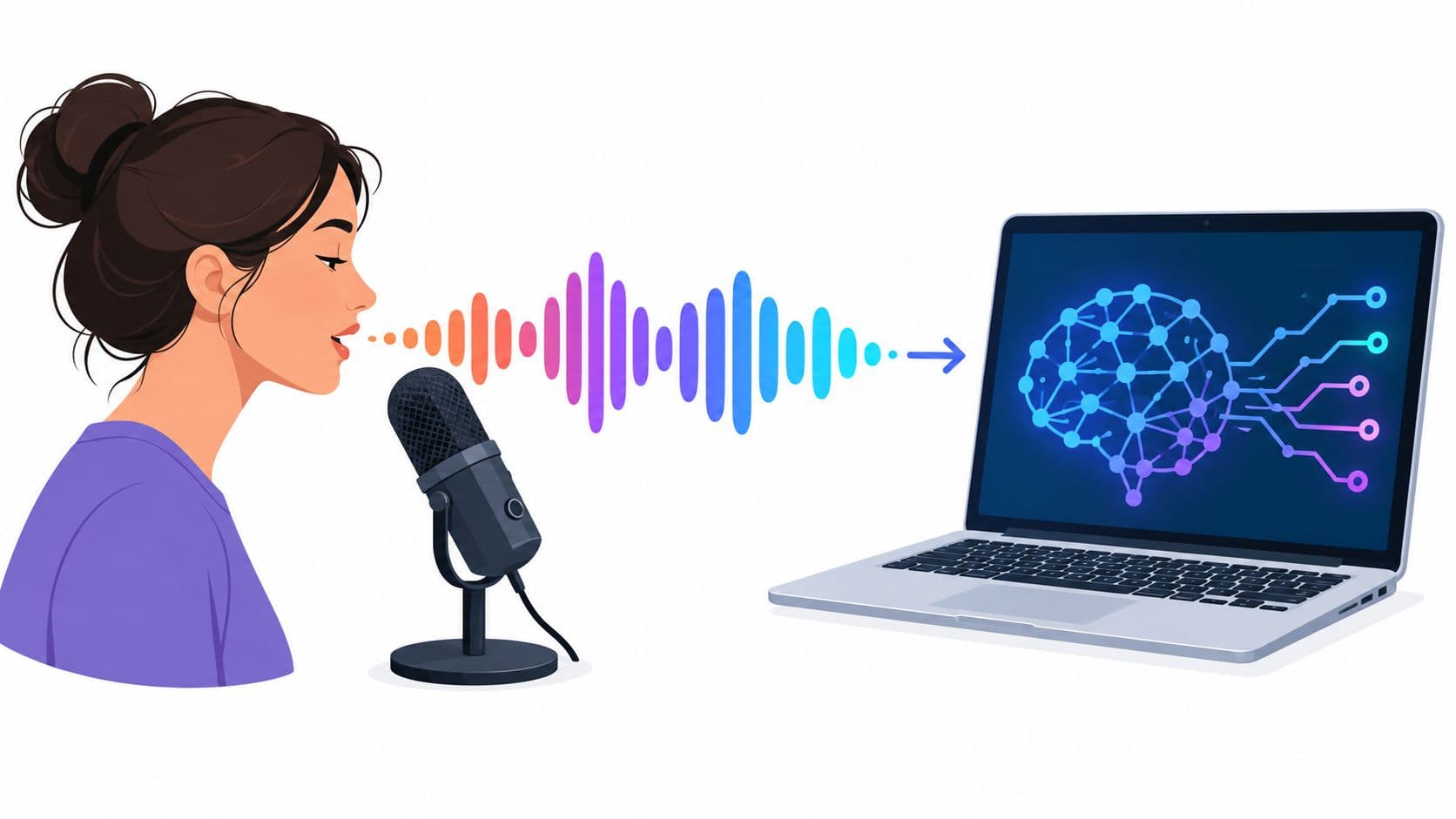
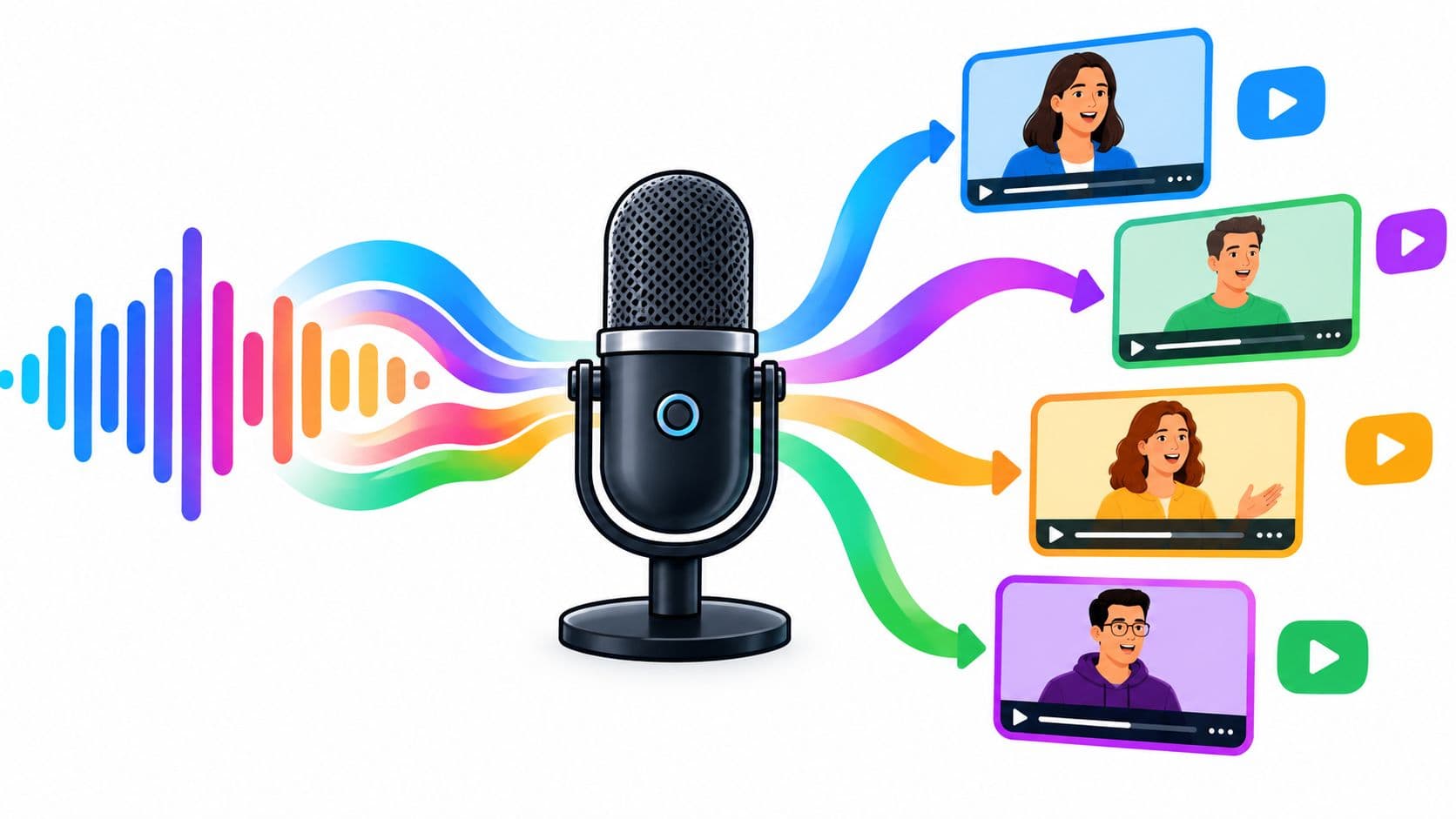
Drag-and-drop editing becomes useful after the concept is sound. Swap hooks, reorder product shots, change the caption emphasis, and create a small family of versions while keeping the offer stable. Custom avatars, lip sync, voice cloning, and multilingual voiceovers can help teams localize campaigns, but only when the speaker identity and disclosure approach fit the brand.
The AI CMO video system is another reference point for teams thinking about how AI video production can connect to broader marketing workflows. The strategic question isn't whether a tool can render a video. It's whether the workflow helps a marketer move from insight to approved, measurable creative without losing control.
Localize the message, not just the words
Direct translation often preserves vocabulary while losing intent. For each market, review the hook, examples, humor, product terminology, reading speed, and call to action. Native reviewers should check pronunciation and cultural fit before launch, especially for voice clones or avatar-led ads.
Use separate asset folders for approved claims, product footage, logos, voice files, disclaimers, and platform exports. That structure reduces accidental reuse of an outdated offer and makes it easier to trace which source material produced a live ad.
A scheduler can then publish the approved versions across channels and return performance data to the creative backlog. Treat that backlog as a decision log. Record the hypothesis, audience, format, spend context, result, and next change. Without that discipline, rapid production only produces a faster cycle of forgetting what the team learned.
For teams comparing workflows, this guide to an AI video generator for ads provides a useful reference for structuring ad variations and platform formats.
Measurement and KPIs for AI Campaigns
AI creates a measurement trap. Its ability to produce novel openings can raise early engagement while hiding a weak offer, an unclear landing page, or low-quality traffic. A sound dashboard must separate attention, intent, and business outcome.
Start with the first meaningful viewer action. Track the rate at which people stop, start, and continue watching, but don't treat those metrics as proof of commercial success. Then follow the click through the landing page, checkout, lead form, or product experience. The same creative should be evaluated against the quality of the action it generates.
| Funnel Stage | Primary KPI | AI Impact Area |
|---|---|---|
| Attention | Thumb-stop rate and view-through rate | Hook, first frame, pacing, captions |
| Engagement | Click-through rate and engaged sessions | Message relevance, product demonstration, call to action |
| Consideration | Landing-page progression and qualified leads | Proof, claim clarity, audience-message fit |
| Conversion | Conversion rate and cost per acquisition | Offer alignment, trust, page continuity |
| Efficiency | Return on ad spend and cost per approved asset | Production choices, testing speed, budget allocation |
| Retention | Repeat purchase, lead quality, or customer value | Promise accuracy and audience quality |
Design tests that answer one question
A useful test isolates a meaningful variable. Compare two openings while holding the offer, audience, landing page, and call to action stable. Then compare a human-edited baseline with an AI-assisted version using the same commercial message. If the test changes everything, the result may be actionable for a campaign but weak as a learning asset.
Use platform reporting for delivery and engagement, analytics for on-site behavior, and CRM or order data for revenue quality. Give each asset a consistent naming convention so the team can connect the ad to the audience, offer, version, and destination page.
Measurement rule: Scale the creative that produces valuable actions at an acceptable acquisition cost, not the creative that merely wins the first metric in the dashboard.
Review results at a level where the data can support a decision. A single purchase or lead may justify investigation, but it shouldn't automatically establish a creative rule. Look for repeatable patterns across audiences, placements, and versions, then promote those patterns into the next brief.
This social media ROI measurement framework can help teams connect platform activity to business outcomes. The key is to make that connection before the campaign launches, not after a high click-through rate creates pressure to scale.
Best Practices for Brand Trust and Governance
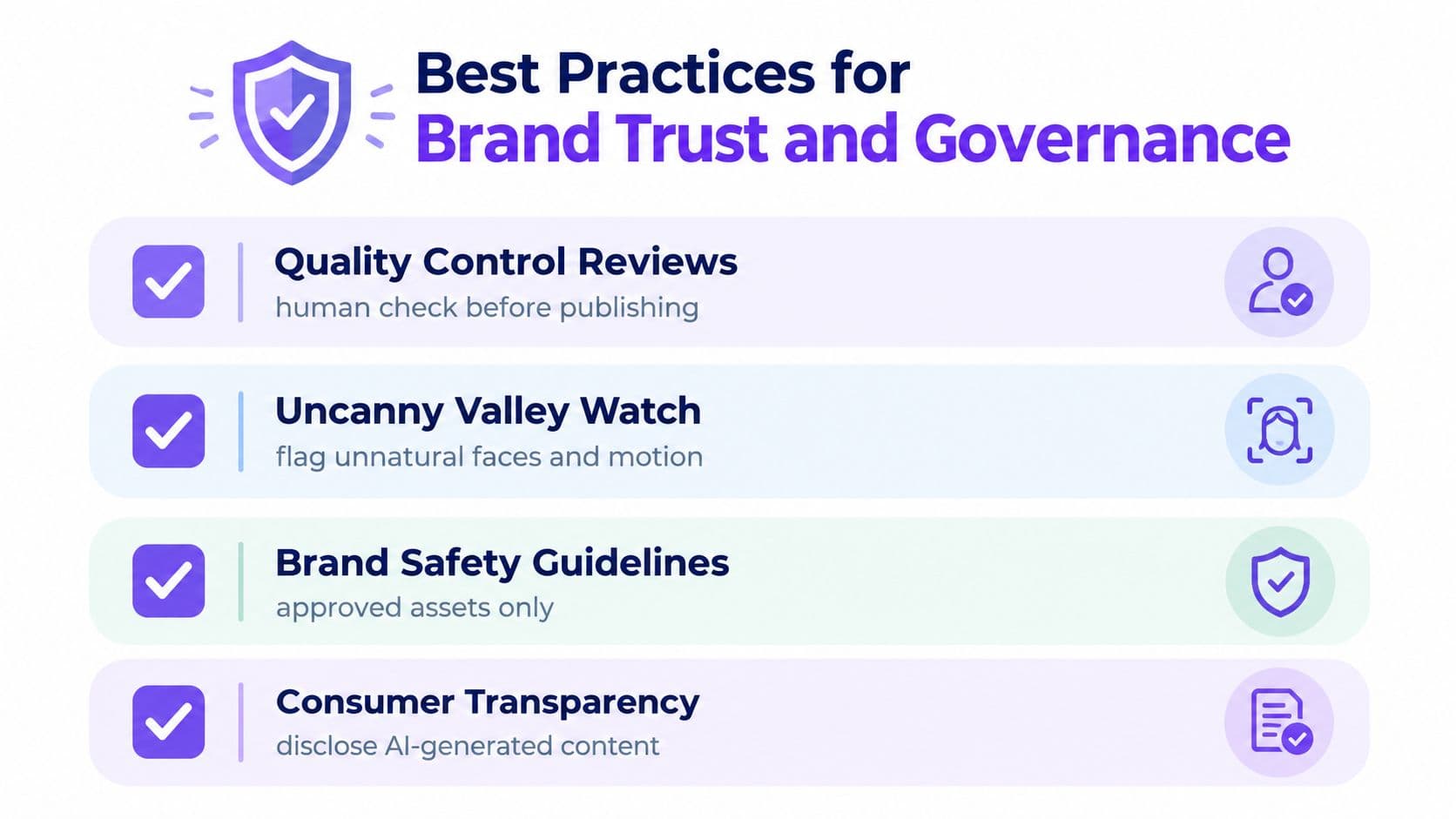
The biggest risk in synthetic creative isn't that viewers know AI was involved. It's that the video feels careless. Unnatural faces, broken hands, inconsistent product details, strange lip movement, and over-polished UGC can signal that the brand values output more than accuracy.
A 2025 Kantar study cited by The Verge found that consumers were put off by ads with obvious AI artifacts, while skillful AI ads that were less detectable performed better, as reported in IAB's discussion of AI-powered video outcomes. That creates a useful distinction. The goal isn't to make every ad visibly synthetic. The goal is to use AI where it improves production while preserving a credible human experience.
Use invisible augmentation by default
Invisible augmentation means AI assists with the work viewers don't need to notice. It can help cut footage, generate caption options, localize a voiceover, clean a transcript, extend a background, or produce storyboard alternatives. The final ad should still feel intentional, physically plausible, and consistent with the product.
Visible synthetic elements can work when they serve the concept and the audience accepts them. They become risky when an avatar makes a personal testimonial without a clear reason, when a voice clone implies a real person endorsed a claim, or when generated scenes show a product doing something it can't do.
Put review gates around the workflow
A practical governance checklist should cover four layers:
- Claim review: Verify every performance statement, comparison, feature description, price reference, and customer implication against approved source material.
- Visual review: Inspect hands, faces, reflections, product geometry, text rendering, transitions, and continuity frame by frame.
- Brand review: Check tone, color, typography, music, spokesperson use, and whether the ad resembles approved brand communication.
- Platform review: Confirm disclosures, rights, targeting restrictions, music licensing, and prohibited content requirements before publishing.
Keep a record of the prompt or source brief, input assets, generated versions, editor changes, approvals, and final export. That record helps the team identify where errors entered the process and makes recurring problems easier to prevent.
Human QA shouldn't be a ceremonial final click. Give reviewers authority to reject a video, request a new render, or remove a synthetic element. The fastest workflow is the one that catches a trust-damaging mistake before paid distribution magnifies it.
The Future of Agentic Video Advertising
AI video advertising is shifting from asset generation to campaign execution. The IAB's 2026 AI-powered video materials report that two in three buyers were already using, testing, or planning to use agentic AI for digital video campaigns, while 28% were actively investigating it. The report also projects U.S. digital video ad spend to surpass $80 billion in 2026.
An agentic workflow could detect a performance drop, determine whether the hook or audience is responsible, generate a controlled replacement, apply brand checks, and recommend a budget change. The marketer still sets the limits. The system should not modify a regulated claim, change an offer, publish an unreviewed avatar, or optimize for cheap clicks while qualified actions decline.
The strongest use case is invisible augmentation. AI can adapt an approved concept to each platform's aspect ratio, opening sequence, caption treatment, and call to action without making the ad feel synthetic. Smaller advertisers can also shorten the gap between observation and testing. Smaller brands projected 45% of their digital video to be developed with generative AI by 2026, compared with 36% for larger brands, as reported in the IAB and Marketing Dive coverage. The advantage comes from better decisions with limited creative, audience, and budget resources, not from producing the largest asset library.
Audit the workflow this week. Find where production delays testing, platform adaptations are skipped, creative metrics stop before revenue, or nobody owns the final trust decision. Add AI at the bottleneck that improves learning while protecting the promise made to customers.
Hooked offers trend tracking, AI-generated scripts, UGC-style ads, platform-ready formats, multilingual voiceovers, and scheduling tools for social video production. Use Hooked to turn approved creative briefs into controlled ad variations, then test them against downstream conversion and customer-quality metrics.