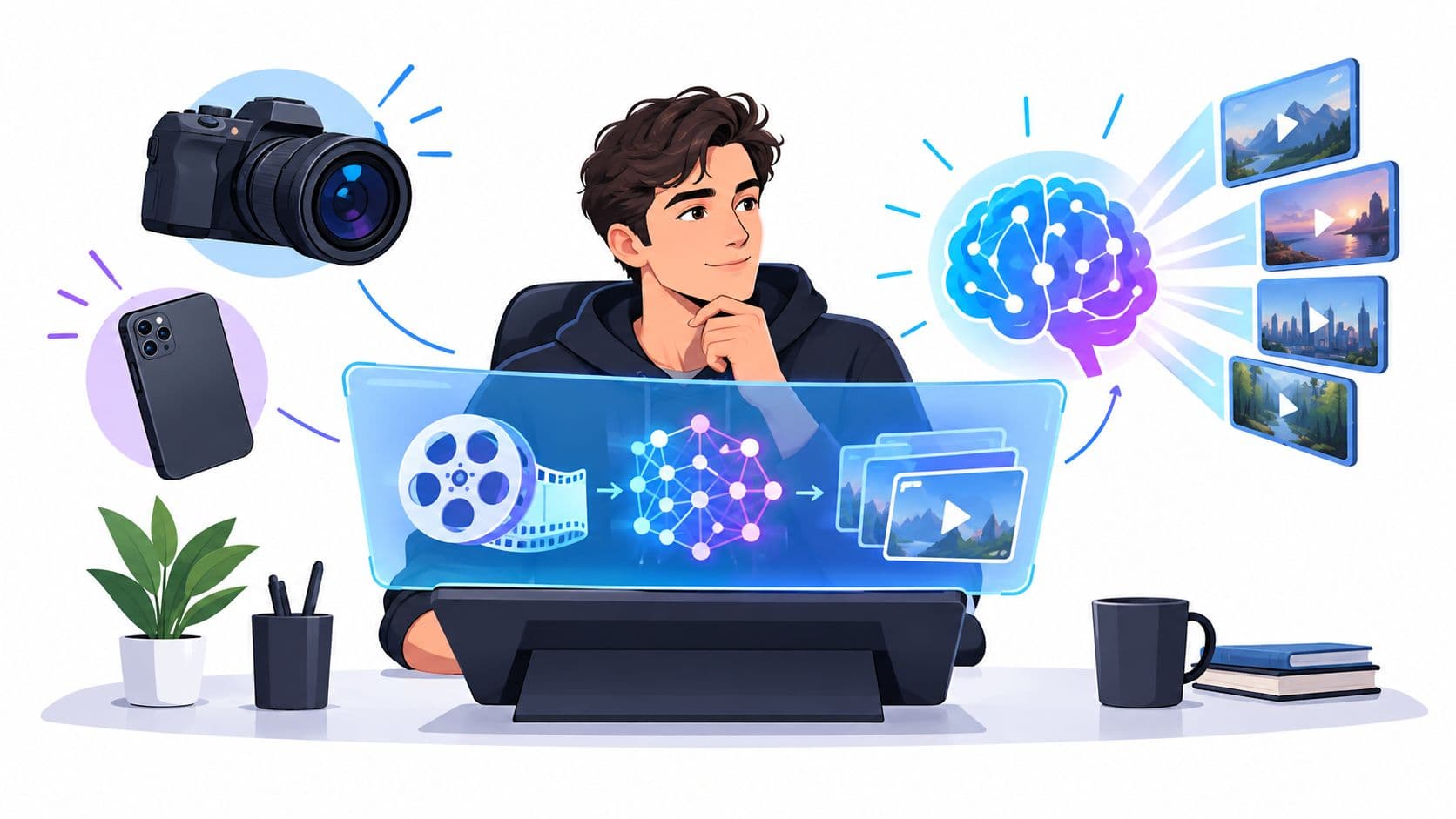
You're watching a TikTok trend take off, and your team wants to publish a version before the format feels tired. You have a product, a rough script, and perhaps a few reference images, but not a camera crew or a full editing day. The practical question isn't whether AI can make a beautiful clip. It's whether it can help you make a credible, on-brand video quickly without losing control of the details that matter.
The Short Answer Most Beginners Are Looking For
AI video is a branch of generative artificial intelligence that creates or transforms moving-image content from inputs such as text, images, audio, or existing footage. It includes more than typing a prompt and receiving a synthetic scene. Common workflows include text-to-video generation, image-to-video animation, video-to-video restyling, synthetic presenters, lip synchronization, and automated editing. The Federal Reserve's overview of AI adoption describes this broad category of creation and transformation.
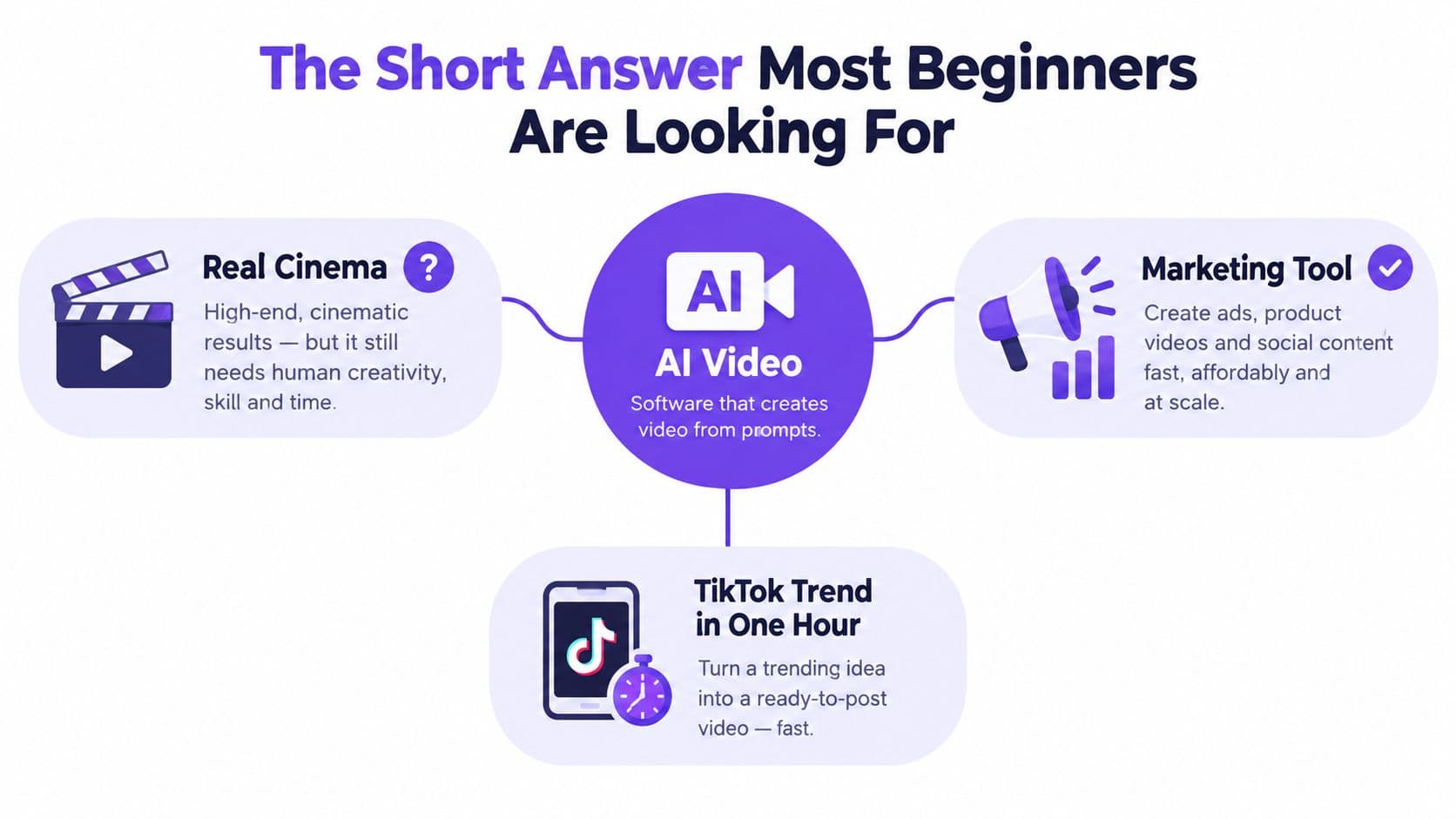
For a marketer, the simplest working definition is this: AI video is software that synthesizes moving images under instructions and constraints. You might describe a scene, animate a product photo, change the style of existing footage, create a presenter, translate speech, or assemble clips with captions and music.
That definition also prevents a common misunderstanding. AI video isn't automatic cinematography. A cinematographer decides what the audience should notice, how a character behaves, where the camera moves, and whether a moment feels emotionally credible. A generator can produce candidates, but it may change a face, distort text, or make a hand move unnaturally between frames.
Practical rule: Treat the model as a fast production partner, not as the director of record.
The distinction matters for your one-hour TikTok task. AI can help you explore hooks, generate visual options, animate a still, build a faceless explainer, or adapt a finished idea to another format. You still need to choose the strongest concept, check the facts, protect your brand identity, review the footage, and decide whether the result earns publication.
How the Field Got Here in Roughly a Decade
A marketer creating a product launch today can move from a written scene description to a short video draft. That workflow rests on decades of research, not a single recent invention.
Computerized generative methods reach back to the 1950s. Early systems used explicit rules and templates, so their outputs stayed within narrow boundaries. They could follow instructions, but they did not interpret a scene with the flexible control creators now expect.
The next phase brought generative adversarial networks, or GANs, together with variational autoencoders and other learned methods. A 2016 study pioneered generating natural images from text. The 2018 paper “Video Generation from Text” helped establish GAN-based text-to-video generation as a distinct research direction, as documented in this review of text-to-video generation research.
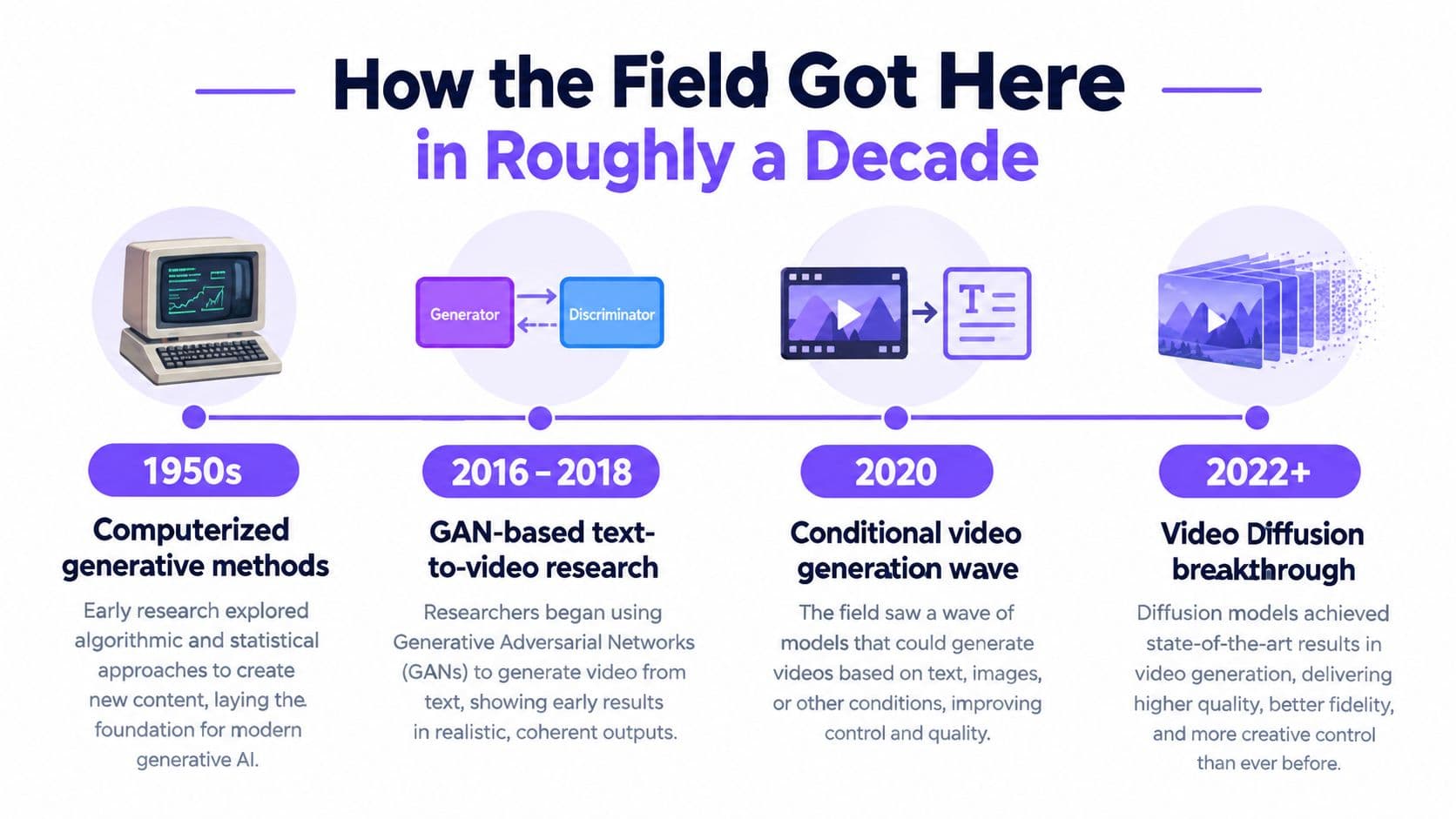
By 2020, text-to-video had become a major area of conditional video-generation research. Systems such as GODIVA explored autoregressive modeling and three-dimensional sparse attention for open-domain generation. These methods pushed research beyond single images toward sequences where objects, characters, and camera changes had to relate across time.
A major shift arrived in 2022, when the Video Diffusion Model extended diffusion methods to higher-fidelity video synthesis. Diffusion models then became the leading approach for text-to-video generation, while newer Diffusion Transformer architectures improved control and temporal consistency. One bibliometric review reported generally increasing publication volume from 2020 through 2025, despite a decline in 2021.
The result is a field that can produce longer, more detailed scenes, while still requiring judgment. Evaluation, controllability, data efficiency, and consistent physical behavior remain open problems. For a creator, that history leads to a practical choice: use generated footage as a draft, then review identity, motion, framing, and trust before publication. A convincing demo shows progress. It does not guarantee a clip will survive close review.
Why Video Is Harder Than Images for AI
A still image only needs to look plausible at one moment. Video behaves more like a flipbook in which every page must agree with the pages before and after it. A character's face, clothing, body shape, lighting, background, and movement all need to remain believable as the sequence advances.
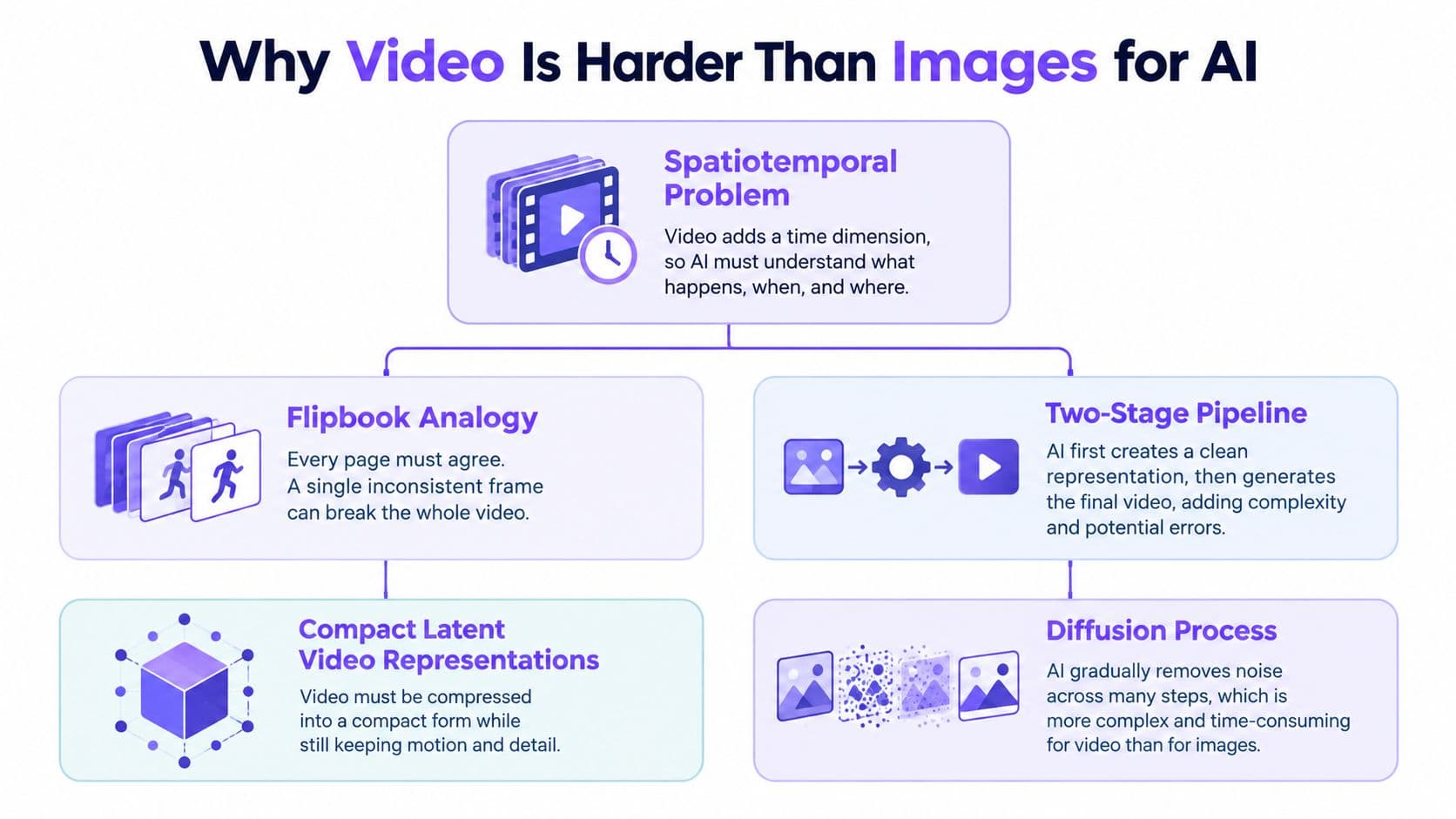
Most modern systems don't process every video directly as raw pixels from start to finish. They commonly build on text-to-image models and use a two-stage process. First, the system creates a compact latent representation of the video. Then it improves that representation through spatial and temporal super-resolution, recovering visual detail while modeling how the scene changes across frames. The research on long-range video generation describes this general architecture and its consistency challenges.
The compression helps manage the enormous spatiotemporal volume of video data. But it doesn't remove the underlying problem. The system still needs to preserve identity, motion, object permanence, camera behavior, scene geometry, lighting, and physical relationships over time.
The failure usually appears between frames
A generated frame can look excellent in isolation while the sequence fails in motion. A product label may change shape. A person's sleeve may merge with an arm. A face may look different after the camera turns. An object that leaves the frame may return with a new color or structure.
Long-range generation makes this especially visible. Research found that existing systems struggle when content leaves the field of view and later returns, because the model may invent inconsistent content instead of remembering the original object or character.
For practical review, don't ask only whether the clip “looks good.” Separate the questions:
- Subject identity: Does the person, product, or character remain recognizably the same?
- Motion smoothness: Do movements flow naturally, without abrupt jumps?
- Temporal flicker: Do textures, edges, lighting, or details flash between frames?
- Spatial relationships: Do objects remain in the correct positions relative to one another?
The VBench framework formalizes video quality across 16 dimensions, including subject identity inconsistency, motion smoothness, temporal flickering, and spatial relationships. That vocabulary gives creators a better review method than relying on one overall aesthetic impression.
The Main Flavors of AI Video Explained
The best input mode depends on the job. A product marketer who already has a strong product photograph shouldn't begin with an unrestricted text prompt, while a creator testing a visual concept may benefit from generating a scene from language.
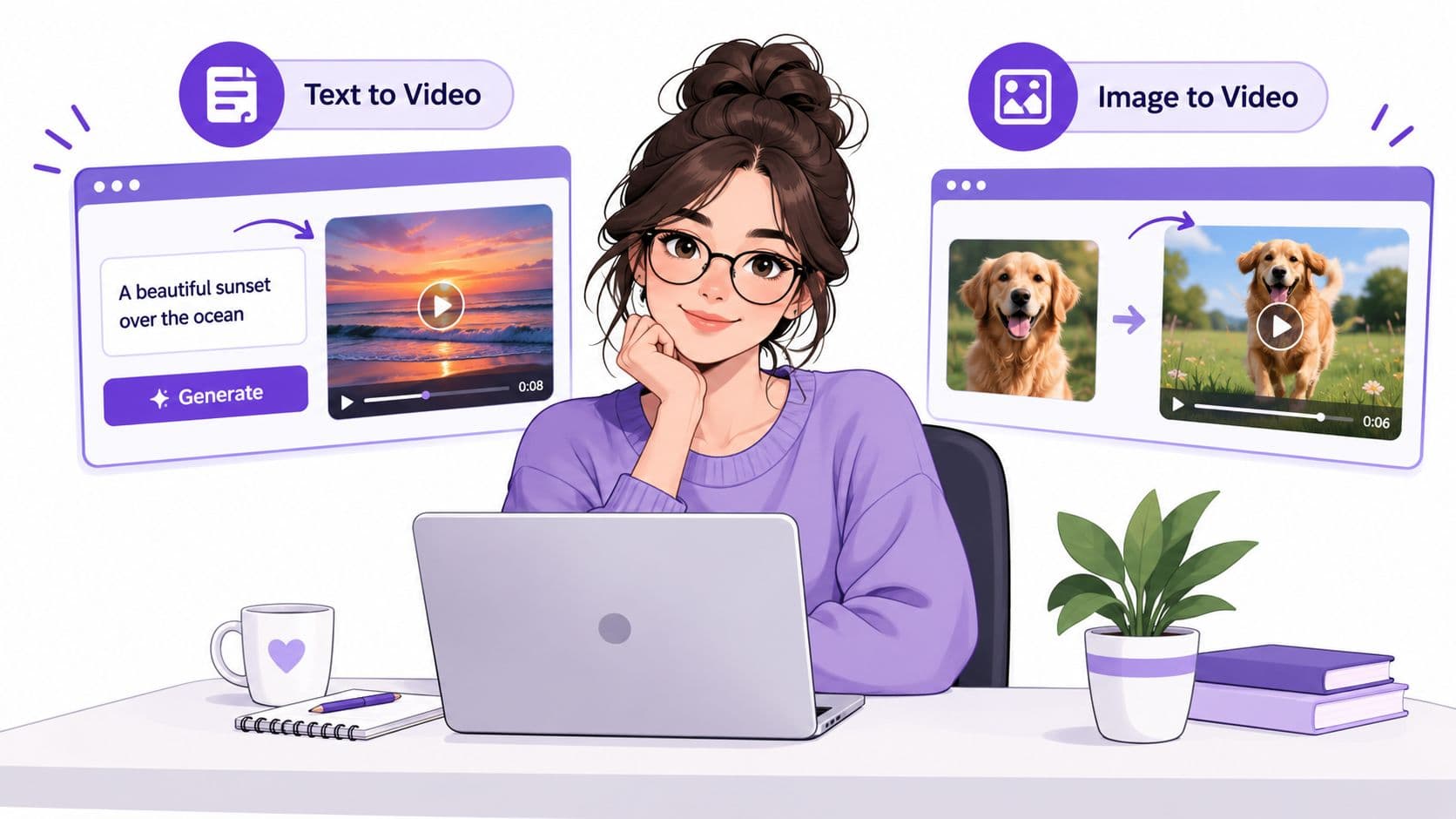
Text-to-video
You describe the scene, action, camera, style, and atmosphere. A language encoder converts the prompt into conditioning signals, and a diffusion or transformer-based generator predicts a coherent latent video. This mode suits concept exploration, visual hooks, background scenes, and short clips where you don't need exact product geometry.
The weakness is freedom. The model has to invent appearance and motion at once, so it may satisfy the mood while missing the specific object, action, or brand detail you intended.
Image-to-video
You provide an initial image that anchors the appearance. The system then focuses more heavily on predicting movement and subsequent frames. This is often a better choice for a product hero image, a recurring illustrated character, or a thumbnail that needs gentle animation.
A reference image narrows the model's choices, but it doesn't guarantee perfect preservation. Prompt the movement explicitly, such as “slow camera push toward the bottle” or “hair moves gently in a light breeze,” rather than asking for a vague transformation.
Video-to-video
Here, existing footage supplies the timing and movement while the model changes style, appearance, or visual treatment. A creator might restyle a live-action clip, turn footage into an illustrated sequence, or adapt a rough performance into a different visual language.
This approach keeps more of the original motion, but it inherits the need for consent, rights review, and careful inspection. Restyling can also introduce unstable edges, altered faces, or changed text.
Audio, speech, and presenter workflows
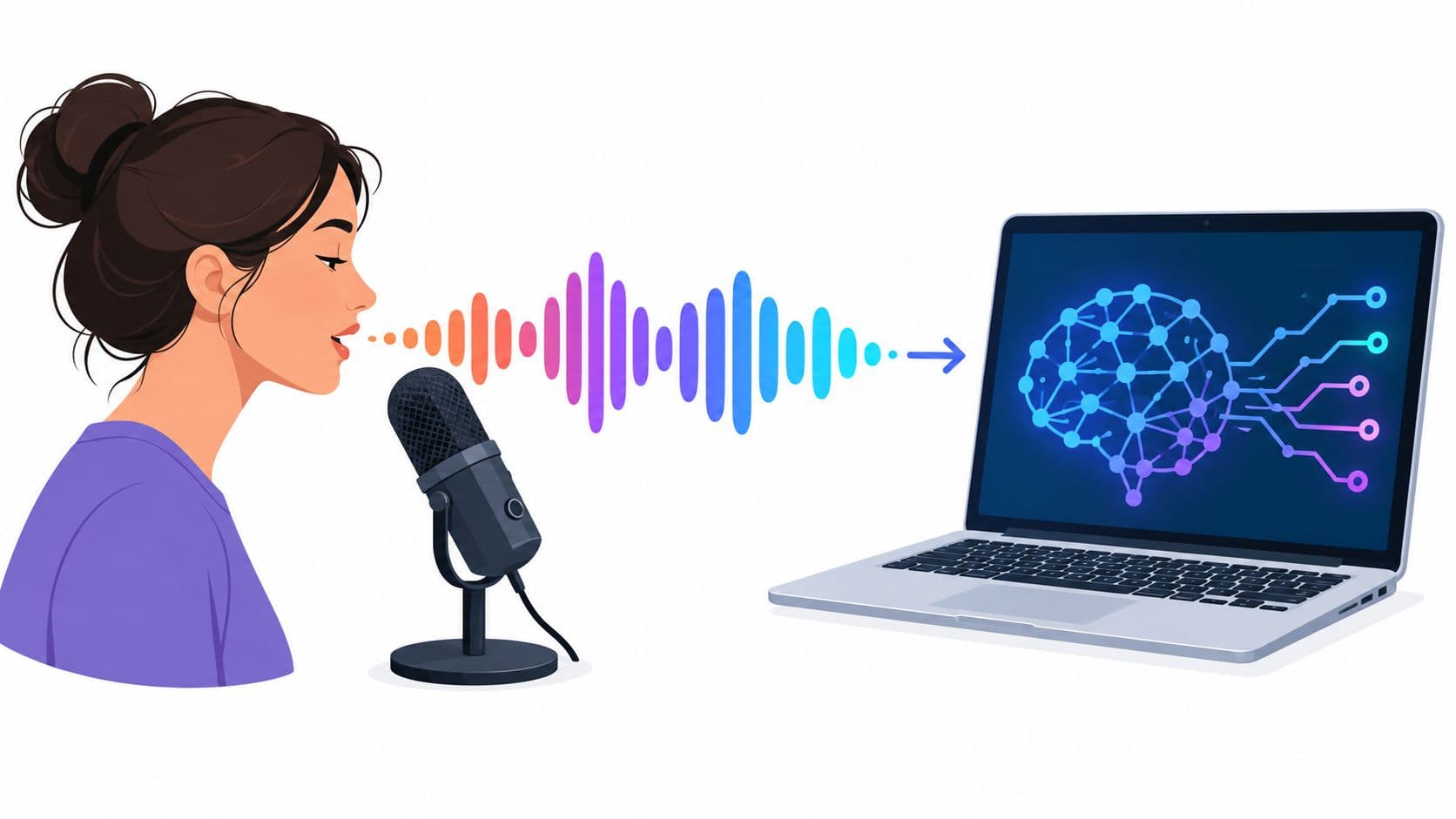
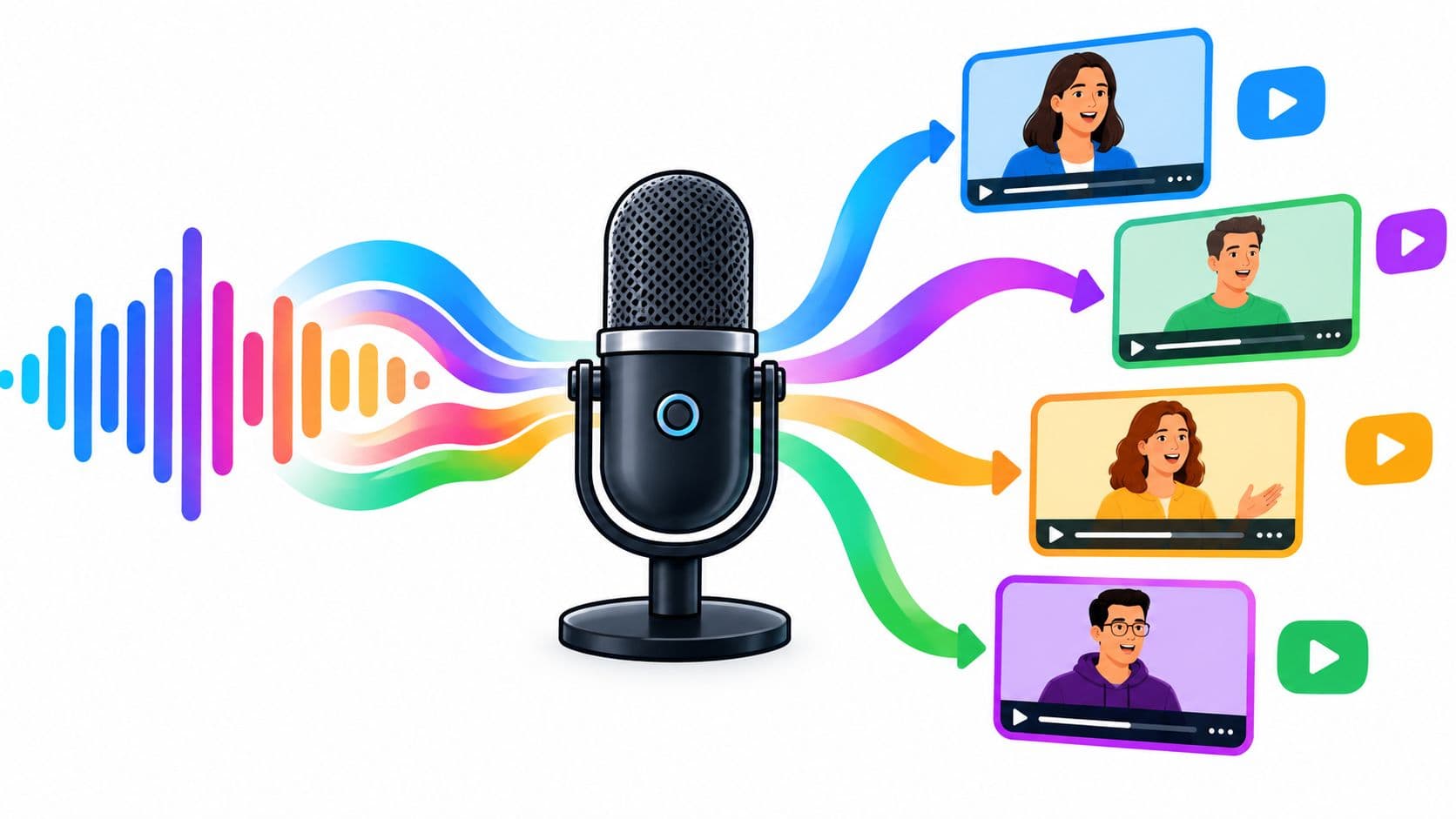
Audio- or speech-conditioned systems can generate synthetic presenters, synchronize lips, create voice-driven avatars, or adapt a script to a visual speaker. These workflows can help teams produce explainers and localized versions without filming every presenter in every language.
The technical shortcut has a tradeoff. Latent video diffusion can reduce the spatial representation to roughly one-eighth of the original width and height, implying about a 64-fold reduction in spatial memory compared with pixel-space processing, as described in this technical explanation of latent video diffusion. Compression and denoising can still discard fine temporal details, producing flicker, warped hands, unstable text, or physically implausible motion.
Use the modes as a kit of parts rather than a quality ladder. You might generate a background with text-to-video, animate a product image, record a human voice, and assemble everything with automated editing. Before publishing, use a practical guide to checking video authenticity signals when a clip needs additional scrutiny. Tools such as Hooked's AI video generator can fit into this broader workflow by turning ideas and assets into short-form video drafts.
The Trust and Quality Tradeoff Creators Miss
A marketer can publish a polished AI clip that still feels untrustworthy. Viewers notice identity, motion, and emotional intent before they admire resolution. A recent survey found that 83% of surveyed viewers had watched a video they suspected was AI-generated. The leading warning signs included robotic gestures at 67%, unnatural voices at 55%, and weak emotional tone at 51%, according to survey coverage of AI video audiences and marketers.
These signals turn technical choices into creative decisions. A tightly framed product shot gives the system fewer identity details to distort. Reference images can anchor a character, package, or logo across shots. Human review must still judge whether the movement supports the words, whether the face appears emotionally present, and whether the brand understands its audience. A smooth render cannot rescue a generic script or an uncanny delivery.
Speed needs a review system
The same survey found that 90% of marketers wanted to edit AI-generated content, 95% required brand representation, and 99% wanted brand personality to remain visible.
That distinction separates output volume from usable output. AI can produce more candidates, while a person still selects the right idea, sharpens the language, removes unsupported claims, and decides whether the performance feels natural. Without that filter, faster production can multiply repetitive or visibly synthetic content.
A short review checklist catches many avoidable failures:
- Voice naturalness: Listen for strange emphasis, flat emotion, incorrect pronunciation, and timing that does not match the script.
- Visual continuity: Watch the entire clip. Check faces, hands, logos, packaging, text, and background details, not only the opening frame.
- Factual accuracy: Verify product claims, demonstrations, captions, translations, and visual statements that could mislead.
- Disclosure: Decide whether the audience or platform needs a clear indication that synthetic media was used.
- Brand distinctiveness: Remove generic hooks and replace them with specific language, recognizable visual cues, and a clear point of view.
More generated drafts help only when someone knows what makes a draft worth keeping.
Use human review from the beginning. Give the system constrained instructions, generate several candidates, inspect the full sequence, and revise the strongest version. Treat the first render as a production draft, not a finished advertisement. This process protects trust while letting creators gain speed.
Where AI Video Actually Earns Its Keep
AI video earns its place when the workflow repeats and the constraints are clear. A one-off cinematic experiment may look exciting, but recurring content benefits more from dependable inputs, recognizable formats, and a defined review step.
Faceless channels
A faceless channel can use reference images, recurring visual motifs, locked character descriptions, and a consistent voice. The production pattern is simple: define the host or visual identity once, create short shot-level scenes, and assemble them around a strong script.
The main failure mode is drift. A recurring character may change clothing, facial structure, or proportions between episodes. Keep shots short, reuse approved references, and compare every new episode with earlier posts before publishing.
Human judgment adds the most value during topic selection and scripting. A recognizable format won't rescue a weak idea, and a synthetic narrator still needs a point of view that sounds specific to the channel.
UGC-style ads
UGC-style ads work well when a team wants to test multiple hooks, objections, product demonstrations, or calls to action. An avatar or synthetic presenter can help create variations, while an existing viral format provides a structure for pacing and framing.
The danger is imitation without credibility. If the presenter's gestures feel robotic or the script sounds like a generic testimonial, viewers may reject the message before they process the offer. Use specific customer language, show the product clearly, and have a human decide which version feels believable.
A useful way to expand this system is repurposing one piece everywhere, while still adapting the opening, captions, aspect ratio, and disclosure requirements to each platform.
Multilingual campaigns
AI video can support multilingual production by adapting scripts, generating voiceovers, synchronizing presenters, and rebuilding captions for different audiences. The efficient pattern is to create a source brief with approved claims, visual rules, pronunciation notes, and market-specific restrictions before generating localized versions.
Translation alone isn't localization. A literal script may sound unnatural, use the wrong level of formality, or miss a cultural reference. Native reviewers should check pronunciation, emotional tone, claims, captions, and whether the presenter appears to speak naturally.
For creators building repeatable short-form systems, AI tools for creators can support workflows involving faceless channels, UGC concepts, and platform-oriented production. The tool matters less than the operating pattern around it: reference assets, clear constraints, multiple drafts, and human approval.
Disclosure, Consent, and Cross-Platform Risk
A synthetic presenter, cloned voice, or generated likeness changes more than the look of a video. It can affect permission, labeling, rights, and distribution before the first frame is rendered. Put those decisions in the production brief, alongside the script and shot requirements.
An Adobe creator survey reported that 85% of creators said expectations for disclosing AI use were increasing or staying the same, according to coverage of creator disclosure expectations and AI transparency. That finding does not produce one universal label. Requirements may vary with realism, the extent of alteration, advertising status, platform, and market.
Build provenance into production
Keep a record of which assets are synthetic, which people granted permission, and whether a voice or likeness was cloned. Preserve available provenance metadata and approved source files. Check that labels and captions remain visible when the video is cropped, reformatted, downloaded, or reposted.
The EU AI Act's transparency duties for synthetic or manipulated content are scheduled to apply from August 2, 2026, including machine-readable marking and disclosure obligations for relevant AI-generated or manipulated media. Cross-border teams should confirm which rules apply to each publication instead of assuming that one caption satisfies every market.
Disclosure also shapes persuasion. An AI label may reduce trust in some contexts, so pair transparency with natural scripting, documented permission, factual review, and credible delivery. A label informs the viewer. It cannot repair an artificial performance that looks or sounds implausible.
Review these decisions before generation:
- Avatars or synthetic presenters: Confirm identity rights, permitted use, and audience expectations.
- Cloned voices or likenesses: Obtain documented consent and define where the asset may appear.
- Multilingual reuse: Check local disclosure, translation, pronunciation, and platform rules.
- Political or health claims: Apply additional factual and regulatory review.
- Paid social advertising: Verify ad policies, labels, claims, and landing-page consistency.
A creator publishing the same concept on YouTube Shorts, TikTok, and paid placements may need different crops, labels, captions, and provenance handling. A Social Media Scheduler for video creators can help coordinate approved files and publication timing, but it does not replace legal or editorial review.
For altered likenesses, identity is the constraint that matters most. Confirm permission and retain the approval record before using a deepfake video maker. Human review should happen before publication, not after a platform or viewer questions the result.
Putting It All Together for Your Next Brief
A useful AI video brief starts with the job, not the tool. Decide whether you need a fast concept, a product animation, a recurring faceless format, a UGC test, a localized version, or an edit of existing footage. Then choose the input mode that gives the model the right constraints.
Use AI video for speed, multilingual reach, faceless consistency, and UGC iteration. Plan around its limits, especially temporal consistency in longer scenes, audience sensitivity to synthetic signals, and the extra work required for consent and disclosure.
Keep three rules on the page:
- Make shots short and reference-anchored. Use clear motion verbs, camera instructions, aspect ratio, duration, and approved visual references.
- Make generation the start of review. Watch the full clip for identity, motion, text, voice, facts, and brand fit.
- Write disclosure into the brief. Decide how synthetic media, cloned voices, likenesses, and provenance will be handled before production begins.
That's the practical answer to what is AI video. It's constrained synthesis for moving images, useful when creators give the system a focused job and retain responsibility for judgment, trust, and publication.
Hooked helps creators and brands turn trends, scripts, products, images, and audio into short-form videos with AI-generated visuals, voiceovers, captions, music, avatars, and editing. Explore the workflow and start building more consistent, reviewable social video with Hooked.